Blogs
7 Everyday Reasons for Bloating After Meals (Causes, Symptoms & Simple Fixes)
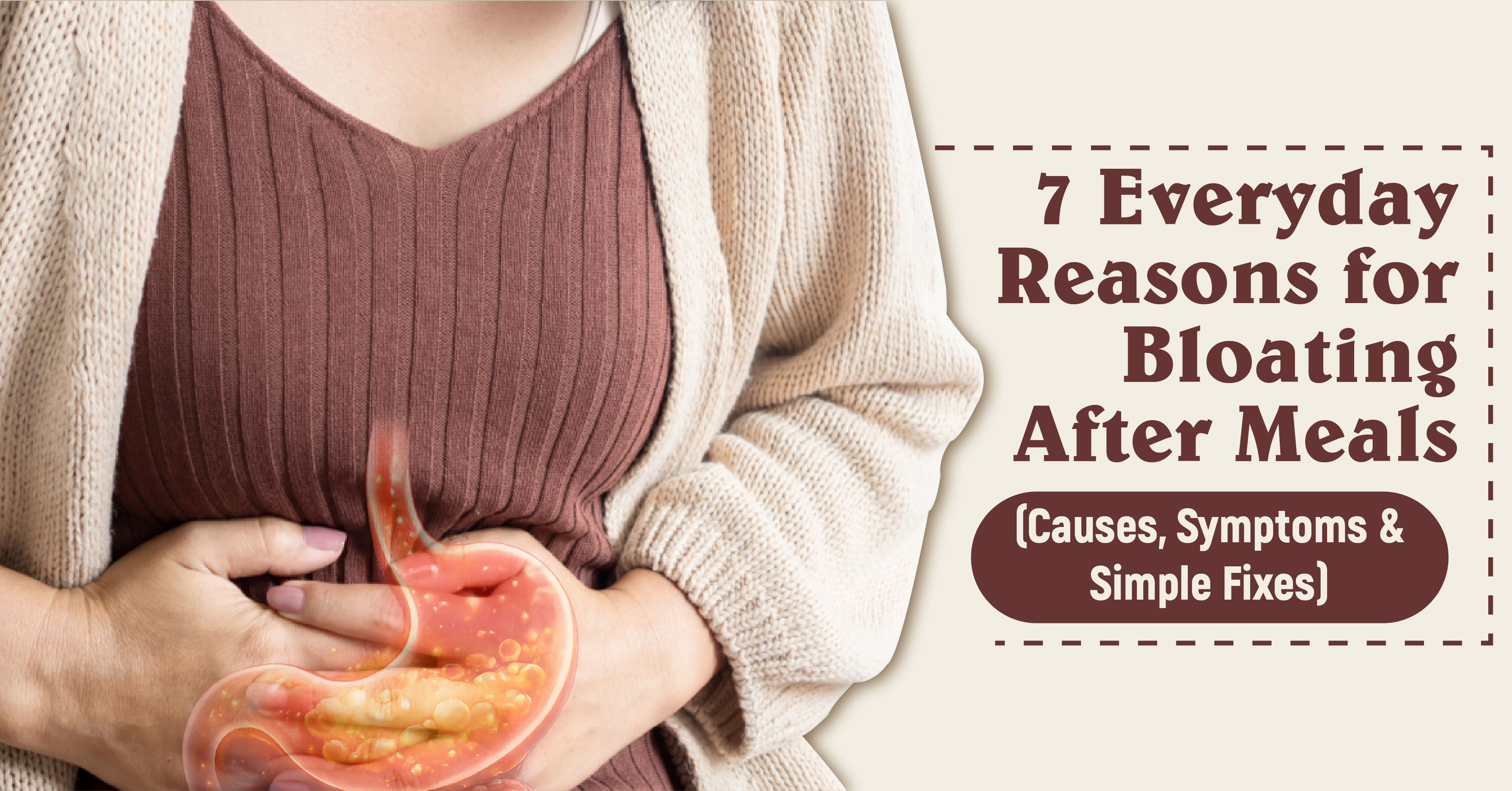
Bloating after meals is one of the most common digestive complaints, often leaving people feeling heavy, uncomfortable, and sluggish. While occasional bloating is normal, frequent bloating and indigestion after meals usually point to poor digestion, eating habits, or food choices that lead to excess gas formation in the gut.
Bloating after meals occurs when food is not digested properly, leading to gas build-up in the stomach or intestines. Common causes include eating too fast, overeating, gas-producing foods, stress, and weak digestion. Improving post-meal habits and following digestive health diet tips can reduce gas and bloating after eating naturally.
What Is Bloating After Meals and Why Does It Happen?
Bloating after meals refers to a feeling of fullness, tightness, or swelling in the abdomen that appears after eating. It is often accompanied by gas and bloating after eating, belching, or mild discomfort.
In Indian diets, bloating and indigestion after meals are commonly caused by heavy foods, irregular eating times, and weak digestion rather than a single food item.
Main Causes of Bloating After Eating
1. Eating Too Fast - A Leading Cause of Bloating After Meals
Eating quickly is one of the most overlooked causes of bloating after eating. When food is not chewed properly, larger particles reach the stomach and ferment, leading to gas and bloating after eating.
This habit also increases the risk of post meal digestion problems and discomfort.
2. Overeating or Heavy Portions
Large meals stretch the stomach and slow digestion.
Result:- Bloating after meals
- Heaviness and pressure
- Increased gas formation
Stopping when you feel 70-80% full helps prevent bloating and indigestion after meals.
3. Gas-Producing Foods in Daily Diets
Some foods naturally produce gas during digestion.
| Food Type | Effect on Digestion |
|---|---|
| Fried & oily foods | Slow gastric emptying |
| Pulses in excess | Fermentation in gut |
| Carbonated drinks | Trapped gas |
| Refined sugar | Bloating & discomfort |
These foods are common triggers of gas and bloating after eating, especially when consumed late in the day.
4. Weak Digestion and Slow Gut Movement
Poor digestive strength results in incomplete breakdown of food.
In Ayurveda, this is linked to weak Agni, which is a primary reason for bloating after meals and recurring gas.
5. Stress and Mental Distractions While Eating
Stress disrupts digestion by slowing stomach emptying and increasing gas production.
People who eat while working or scrolling are more likely to experience bloating after eating, even with light meals.
6. Cold Drinks or Desserts After Meals
Cold foods reduce digestive enzyme activity and contribute to post meal digestion problems, leading to bloating and heaviness.
7. Sitting or Lying Down Immediately After Eating
Remaining inactive after meals slows digestion and traps gas.
This habit is a common reason for bloating after meals, particularly in the evening.
Gas, Bloating and Indigestion After Meals - The Connection
| Digestive Issue | What Happens |
|---|---|
| Gas | Undigested food ferments |
| Bloating | Gas gets trapped |
| Indigestion | Slow digestion |
All three are linked to poor digestion and lifestyle habits, not just food choice.
Digestive Health Diet Tips to Reduce Bloating After Meals
Following the right digestive health diet tips can significantly reduce gas and bloating after eating.
Choose Warm, Cooked Foods
Warm foods support digestion and reduce fermentation.
Eat at Fixed Times
Regular meal timings help prevent post meal digestion problems.
Include Digestive Spices Daily
Cumin, fennel, and ajwain support digestion and help reduce bloating after meals naturally.
Quick Relief Tips for Gas and Bloating After Eating
Light Walking After Meals
A gentle 10-15 minute walk improves gut movement and reduces bloating.
Sip Warm Water
Warm water supports stomach emptying and helps manage bloating after eating.
Avoid Tea or Coffee Immediately After Meals
Waiting at least 45-60 minutes reduces gas and acidity risk.
Ayurvedic View on Bloating After Meals
According to Ayurveda, bloating occurs mainly due to Vata imbalance and weakened digestion.
Simple Ayurvedic practices focus on:
- Strengthening digestion
- Preventing gas formation
- Supporting post-meal comfort
Traditional digestive ingredients used in Indian households align with these principles.
When Bloating After Meals Needs Medical Attention
Consult a healthcare professional if bloating after meals is:
- Persistent and painful
- Accompanied by unexplained weight loss
- Associated with vomiting or severe discomfort
Occasional bloating is normal, but frequent symptoms may need evaluation.
FAQs - Bloating After Meals
Q1: Why do I feel bloated after eating every day?
Daily bloating usually indicates poor digestion, stress, or unsuitable food habits.
Q2: What foods cause gas and bloating after eating?
Fried foods, pulses in excess, carbonated drinks, and sugary foods commonly cause bloating.
Q3: How can I reduce bloating after meals naturally?
Eating slowly, walking after meals, and following digestive health diet tips help reduce bloating.
Q4: Is bloating after meals related to acidity?
Yes, gas and bloating can increase pressure in the stomach, leading to acidity.
Q5: Can Ayurveda help with bloating and indigestion after meals?
Ayurveda focuses on improving digestion through daily habits and natural digestive support.
Conclusion
Bloating after meals is often the body’s way of signalling digestive imbalance. By understanding the causes of bloating after eating and adopting simple daily habits, it is possible to reduce gas, discomfort, and indigestion naturally.
Supporting digestion consistently-rather than reacting only when discomfort arises-helps maintain long-term digestive comfort and overall well-being.
Table of Contents
Latest Blogs
Skipping Meals Frequently? Here’s How It Can Trigger Acidity and Gas Problems
Can Stress Affect Your Digestion? The Hidden Link Between Mind and Gut Health
Weekend Overeating and Monday Acidity: How Your Lifestyle Affects Digestion
Why Office Employees Often Suffer from Gas & Bloating During Long Working Hours