Blogs
Digestive Health Checklist: What to Eat & Avoid After Meals to Reduce Acidity Fast
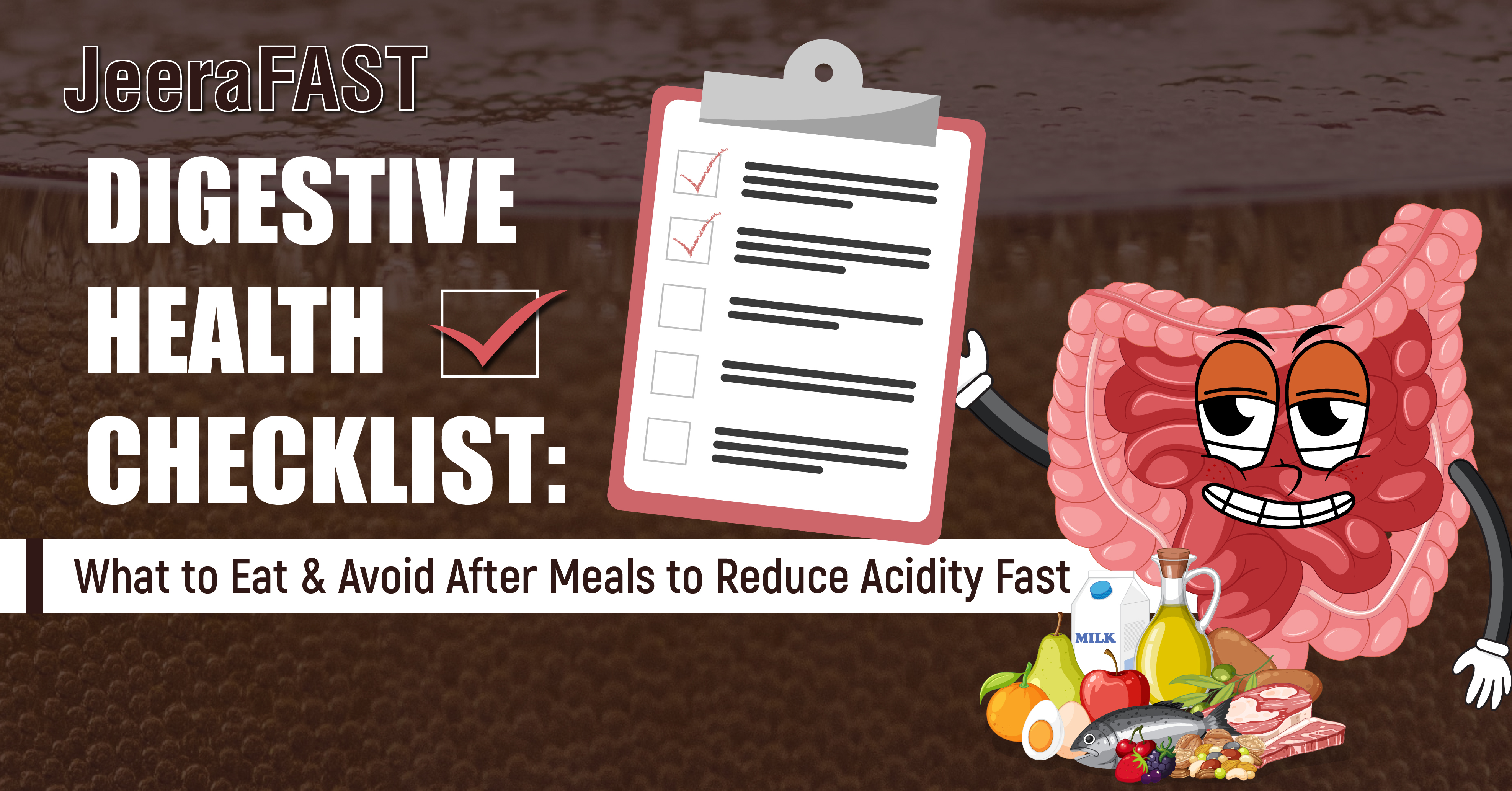
Acidity, gas, and bloating often worsen after meals, not because of what we eat alone, but due to post-meal food choices and habits. Knowing what to eat and avoid after meals can reduce acidity fast, improve digestion, and prevent recurring discomfort—especially when guided by simple Ayurvedic and dietary principles.
To reduce acidity fast after meals, choose light, digestion-friendly foods like fennel, cumin, warm water, and fibre-rich options while avoiding fried foods, excess spice, cold drinks, and sugar. Following the right post-meal dietary habits supports digestion, reduces gas, and prevents acid reflux naturally.
Why Post-Meal Choices Matter for Digestion
Digestion doesn't stop once you finish eating—it begins. In India, acidity and gas are commonly triggered by:
- Heavy lunches followed by inactivity
- Tea or cold drinks immediately after meals
- Fried or spicy side foods
- Poor digestive fire (Agni), as per Ayurveda
Post-meal food choices directly influence acid reflux, gas formation, and bloating, making them critical for digestive health.
Digestive Health Checklist - What to Eat After Meals
1. Fennel (Saunf)
Fennel is traditionally consumed after meals in Indian households.
Benefits:
- Reduces acidity
- Prevents bloating
- Freshens breath naturally
2. Cumin (Jeera) Preparations
Cumin water or cumin tea is a popular digestive aid.
How to consume:
- Jeera water (warm)
- Light cumin-based digestive blends
Cumin is a core ingredient in many Ayurvedic digestive formulations designed for daily comfort.
3. Warm Water (Not Cold)
Sipping warm water helps dilute excess stomach acid and improves gut movement.
Avoid: Ice-cold water, especially after heavy meals.
4. Fibre-Rich, Light Foods (If Hungry Again)
If you feel hungry after meals:
- Fruits like papaya or banana
- Cooked vegetables
- Soaked nuts (small quantity)
These foods reduce acid reflux and support gut balance.
What to Avoid After Meals to Prevent Acidity & Gas
1. Fried and Oily Foods
Fried foods slow digestion and increase acid production.
Common triggers:
- Pakoras
- Samosas
- Deep-fried snacks
2. Tea, Coffee, and Fizzy Drinks
Caffeine and carbonation increase stomach acidity and gas.
Tip: Wait at least 45-60 minutes before consuming tea or coffee.
3. Sugary Desserts Immediately After Meals
Excess sugar ferments in the gut, leading to gas and bloating.
4. Lying Down or Sleeping
Sleeping immediately after meals is a major cause of acid reflux.
Best habit:
Light walking for 10-15 minutes after eating.
Ayurveda's View on Post-Meal Digestion
Understanding Agni (Digestive Fire)
According to Ayurveda:
- Weak Agni - Gas & bloating
- Sharp Agni - Acidity & heartburn
Balanced post-meal habits help stabilise Agni and prevent digestive imbalance.
Simple Ayurvedic Post-Meal Routine
- Eat calmly without distractions
- Avoid cold foods after meals
- Sit upright for at least 30 minutes
- Use digestive spices regularly
These habits form the base of Ayurvedic daily digestive care.
Foods That Commonly Cause Gas & Bloating
| Food Type | Why It Causes Issues |
|---|---|
| Excess lentils | Hard to digest in large amounts |
| Fried snacks | Slow gastric emptying |
| Carbonated drinks | Trapped gas |
| Refined sugar | Gut fermentation |
Understanding trigger foods helps personalise digestion-friendly choices.
FAQs - Post-Meal Acidity & Digestion
Q1: What is the best food to eat after meals for acidity?
Fennel, cumin, and warm water are among the best options to reduce acidity naturally.
Q2: Can drinking water after meals cause acidity?
Large amounts can dilute digestive enzymes. Small sips of warm water are better.
Q3: Is walking after meals good for digestion?
Yes, gentle walking helps prevent gas and acid reflux.
Q4: Why do I get acidity even after eating healthy food?
Eating too fast, stress, or weak digestion can cause acidity regardless of food quality.
Q5: Are digestive aids safe for daily use?
Ayurveda-based digestive support focusing on natural ingredients is often used as part of daily digestive routines.
Conclusion & Gentle Call-to-Action
Managing acidity isn't just about avoiding spicy food—it's about what you do after meals. Small, mindful post-meal choices can significantly reduce gas, bloating, and acid reflux over time.
For those following Ayurvedic principles, supporting digestion daily with traditional ingredients and balanced routines can help maintain long-term digestive comfort without relying on harsh solutions.
Table of Contents
Latest Blogs

Skipping Meals Frequently? Here’s How It Can Trigger Acidity and Gas Problems

Can Stress Affect Your Digestion? The Hidden Link Between Mind and Gut Health
Weekend Overeating and Monday Acidity: How Your Lifestyle Affects Digestion
Why Office Employees Often Suffer from Gas & Bloating During Long Working Hours