Blogs
Weekend Overeating and Monday Acidity: How Your Lifestyle Affects Digestion
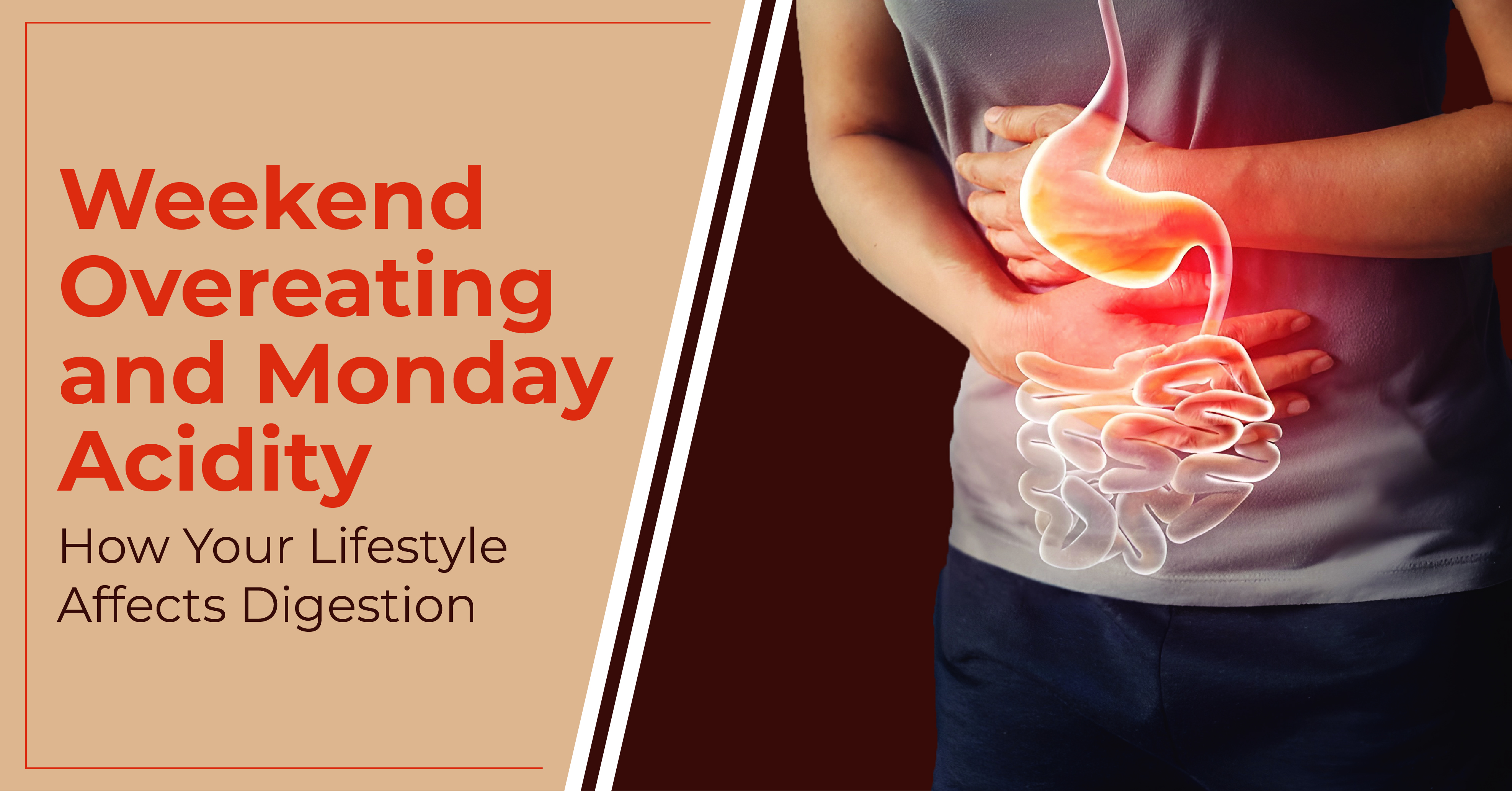
For many people, weekends are a break from routine. Restaurant outings, takeaway meals, desserts, late-night snacks, and cheat meals often become part of social plans and relaxation. However, these sudden dietary changes may leave the digestive system struggling by the start of the week.
Acidity after overeating, bloating after cheat meals, and stomach discomfort after heavy food are common complaints on Monday mornings. Busy lifestyles combined with unhealthy eating effects may disrupt digestion, especially when overeating becomes frequent during weekends.
This article explores how weekend eating habits may affect digestive health, why Monday digestive problems occur, and practical digestion recovery tips that may help support stomach comfort after heavy meals.
Why Weekend Eating Habits Can Affect Digestion
The digestive system works best with balanced routines and regular eating patterns. Sudden overeating or consuming rich foods may temporarily disturb digestive balance.
Why Does Overeating Lead to Acidity?
Acidity after overeating may happen because heavy meals can increase stomach pressure and acid production. Large portions, oily foods, and late-night eating may also slow digestion and contribute to bloating or stomach heaviness.
Common Weekend Habits That May Trigger Digestive Discomfort
Several eating behaviours may contribute to Monday digestive problems, including
- Large portion sizes
- Frequent restaurant meals
- Oily or spicy foods
- Sugary desserts
- Late-night dinners
- Carbonated beverages
- Irregular meal timings
- Reduced physical activity
These habits may place extra strain on digestion compared with regular weekday routines.
Common Symptoms After Heavy Weekend Eating
Digestive symptoms after overeating can vary depending on food choices, meal timings, and overall lifestyle habits.
Symptoms People Commonly Experience
After heavy meals or cheat days, individuals may notice
- Acidity or heartburn
- Bloating after cheat meals
- Burping
- Gas formation
- Stomach heaviness
- Mild abdominal discomfort
- Sluggishness or tiredness
These symptoms may appear immediately after meals or become more noticeable the next morning.
Why Late-Night Eating Can Feel Worse
Late-night meals may affect digestion because the body becomes less active during sleep. Lying down soon after eating may increase acidity sensations and digestive heaviness in some individuals.
How Lifestyle Habits Influence Digestive Health
Digestive wellness is closely linked to eating patterns, stress, hydration, sleep, and physical movement.
Overeating Side Effects Beyond Acidity
Frequent overeating may contribute to
- Slower digestion
- Increased bloating sensations
- Reduced energy levels
- Sleep discomfort
- Irregular bowel habits
Although occasional indulgence is common, consistently unhealthy eating effects may influence long-term digestive comfort.
Why Monday Digestive Problems Are So Common
After weekends filled with irregular eating schedules and reduced activity, many people suddenly return to structured routines and work stress on Monday mornings. This transition may make digestive discomfort feel more noticeable.
Treatment Overview for Digestive Recovery
Recovering from digestive discomfort after overeating often involves supportive dietary and lifestyle habits.
Digestion Recovery Tips After Overeating
Simple digestion recovery tips may include
- Drinking enough water
- Eating lighter meals the next day
- Avoiding additional oily foods
- Taking short walks after meals
- Maintaining regular meal timings
- Including fibre-rich foods
- Avoiding repeated overeating
Small adjustments may help the digestive system feel more balanced after heavy eating.
Why Movement Supports Digestion
Gentle movement encourages healthy digestive activity. Walking after meals may help reduce bloating and support stomach comfort following cheat meals or oversized portions.
Remaining inactive after overeating may worsen feelings of heaviness and bloating.
How Jeera-Based Digestive Support May Help
Traditional digestive ingredients such as jeera (cumin) have long been associated with digestive wellness practices.
High-Level Overview of Jeera for Digestion
Jeera powder for acidity is traditionally used to support digestive comfort after heavy meals or occasional bloating. Jeera has commonly been included in digestive wellness routines for helping manage gas-related discomfort and post-meal heaviness.
Today, jeera-based digestive products continue to be used alongside healthy eating habits and lifestyle balance.
Why Convenient Digestive Support Appeals to Busy Lifestyles
People often prefer portable digestive support options because they are
- Easy to carry
- Convenient after meals
- Suitable during travel or social occasions
- Quick to consume during busy schedules
Products such as JeeraFAST Jeera Powder for Acidity are designed to support digestive comfort for people experiencing acidity after overeating, stomach discomfort after heavy food, and bloating after cheat meals linked to weekend eating habits.
Common User Questions About Overeating and Digestion
Can Overeating Cause Acidity?
Yes. Eating excessive portions may increase stomach pressure and acid production, contributing to acidity and digestive discomfort.
Why Do Cheat Meals Cause Bloating?
Heavy, oily, sugary, or processed foods may slow digestion and increase gas formation, which can contribute to bloating after cheat meals.
How Long Does Digestive Discomfort Last After Overeating?
Mild symptoms may improve within several hours or the next day. Persistent or severe discomfort should be medically assessed.
Can Jeera Help Support Digestion After Heavy Meals?
Jeera has traditionally been used in digestive wellness practices to support stomach comfort and help manage occasional gas, bloating, and acidity.
Safety and Usage Overview
Digestive support products should be used responsibly and according to product instructions.
Important Safety Considerations
Individuals should
- Avoid frequent overeating habits
- Follow product directions carefully
- Maintain balanced eating routines
- Stay hydrated
- Seek medical advice for persistent symptoms
Digestive support products are not substitutes for healthy lifestyle habits.
When to Seek Medical Advice
Medical evaluation may be important if symptoms involve
- Severe abdominal pain
- Frequent vomiting
- Difficulty swallowing
- Persistent acidity
- Unexplained weight loss
- Ongoing digestive discomfort
Persistent digestive symptoms may require professional assessment.
FAQ’s
Why does overeating lead to acidity?
Heavy meals may increase stomach acid production and digestive pressure, contributing to acidity and bloating.
What are common overeating side effects?
Common symptoms include acidity, bloating, gas, stomach heaviness, and sluggishness after meals.
Why do people experience Monday digestive problems?
Weekend eating habits, irregular schedules, and heavy meals may contribute to digestive discomfort at the start of the week.
Can cheat meals affect digestion?
Yes. Cheat meals high in oil, sugar, or spices may slow digestion and increase bloating sensations.
Can jeera powder support digestive comfort?
Jeera powder for acidity is traditionally used to support stomach comfort and help manage occasional bloating and gas.
When should acidity symptoms be medically assessed?
Frequent, severe, or persistent digestive symptoms should be evaluated by a healthcare professional.
Key Takeaways
- Acidity after overeating is commonly linked to heavy meals and irregular eating patterns
- Weekend eating habits may contribute to Monday digestive problems
- Bloating after cheat meals is often associated with oversized or oily meals
- Hydration, movement, and balanced eating may support digestive recovery
- Jeera powder for acidity is traditionally used to support digestive comfort after heavy meals
Conclusion
Weekend food cravings, social outings, and cheat meals can easily disrupt normal eating patterns, especially when portion sizes become excessive or meal timings become irregular. While occasional indulgence is part of modern lifestyles, repeated overeating may leave the digestive system feeling overloaded by the start of the workweek.
Simple habits such as mindful eating, lighter meals after indulgence, staying active, and maintaining hydration may help reduce acidity after overeating and support smoother digestion. For people looking for convenient digestive support after heavy meals, traditional ingredients such as jeera continue to remain popular in digestive wellness routines.
Products such as JeeraFAST Jeera Powder for Acidity are commonly used by individuals managing bloating after cheat meals, stomach discomfort after heavy food, and digestive imbalance linked to weekend eating habits. Combined with healthier food choices and balanced routines, digestive comfort may become easier to maintain throughout the week.
Table of Contents
Latest Blogs

Skipping Meals Frequently? Here’s How It Can Trigger Acidity and Gas Problems

Can Stress Affect Your Digestion? The Hidden Link Between Mind and Gut Health
Why Office Employees Often Suffer from Gas & Bloating During Long Working Hours

Why Digestion Gets Worse in Summer & How to Stay Light and Comfortable